Lagos Strengthens Capacity of Healthcare Workers on Case Management for Epidemic-Prone Diseases

Lagos Strengthens Capacity of Healthcare Workers on Case Management for Epidemic-Prone Diseases

AN EPIC SUCCESS STORY

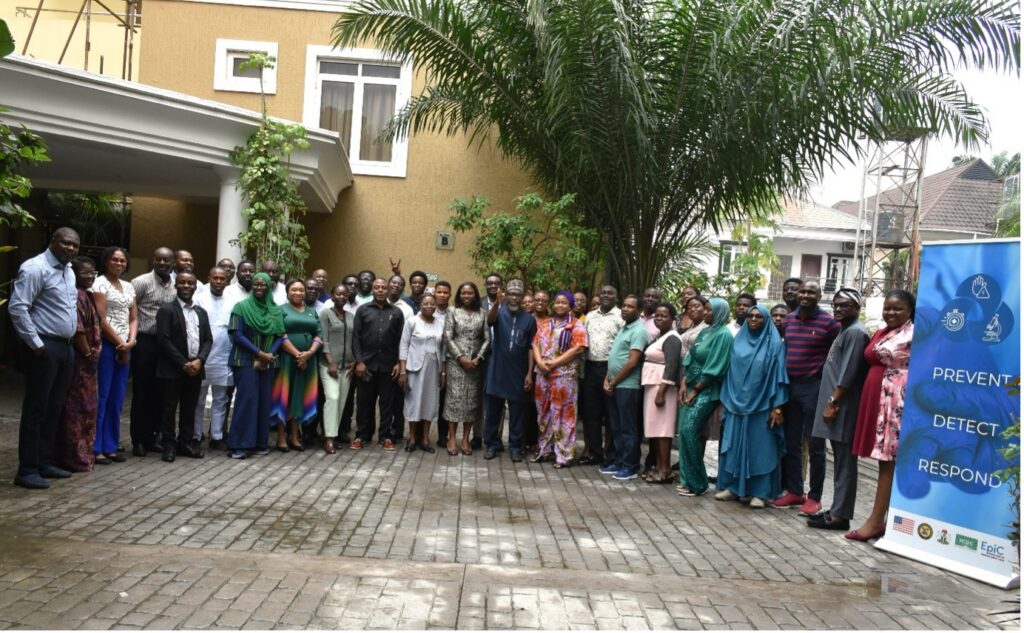
Cross-section of participants at the case management workshop in Lagos

The Lagos State Ministry of Health (LSMoH), in collaboration with the Lagos State Primary Health Care Board (PHCB), with support from the United States Government-funded EpiC Global Health Security Project, convened a three-day workshop on Case Management for Epidemic-Prone Diseases to strengthen outbreak preparedness and response capacity among healthcare workers in Lagos State.

The workshop, which was held from the 20th to 22nd May 2026 in Ikeja, attracted representatives from the Lagos State Ministry of Health, Primary Health Care Board, technical experts, and healthcare workers from tertiary, secondary, primary and private health facilities.  The workshop aimed to strengthen healthcare workers’ competence in the detection, clinical management, infection prevention and control (IPC), and response to priority epidemic-prone diseases.

The engagement focused on strengthening preparedness for diseases of public health importance, including cholera, mpox, diphtheria, and Viral Hemorrhagic Fevers (such as Lassa fever and Ebola Virus Disease (EVD). Participants were trained through a combination of technical presentations, standard operating procedures (SOPs), practical demonstrations, and case-based learning approaches designed to improve response capacity at the facility level.

Dr. Ismail Abdus-Salam giving the opening remarks

Delivering the opening remarks, the Director of Epidemiology, Biosecurity, and Global Health at the Lagos State Ministry of Health, Dr. Ismail Abdus-Salam, highlighted the importance of strengthening preparedness and response systems for epidemic-prone diseases in Lagos State in light of the current EVD outbreak in the African region. He

emphasized the importance of maintaining a high index of suspicion among clinicians and possible risk factors in our setting. He noted that cholera continues to pose significant public health challenges, largely due to failures in the social determinants of health, such as poor sanitation, inadequate waste disposal systems, and limited access to safe drinking water.

Dr. Abdus-Salam further stressed the need to strengthen case management systems to reduce morbidity and mortality associated with outbreaks while building the capacity of healthcare workers to identify, isolate, manage, and report suspected cases promptly. He also highlighted the expectation that participants would cascade the knowledge gained during the workshop to other healthcare workers within their facilities and professional networks.

The technical sessions during the workshop provided participants with updates on priority epidemic-prone diseases in Lagos State and the role of healthcare workers in outbreak preparedness and response.

Training sessions focused on;

  • Disease epidemiology and transmission pathways.
  • Case definitions, surveillance systems, and notification procedures.
  • Infection prevention and control measures, and
  • Clinical management protocols for cholera, mpox, diphtheria, and viral hemorrhagic fevers.

Participants were introduced to the “Identify, Isolate, and Notify” framework as a standard immediate-response approach for suspected cases presenting to healthcare facilities. Facilitators emphasized the importance of early case detection, rapid isolation, prompt notification through established surveillance structures, and adherence to IPC protocols to prevent transmission within healthcare settings and communities.

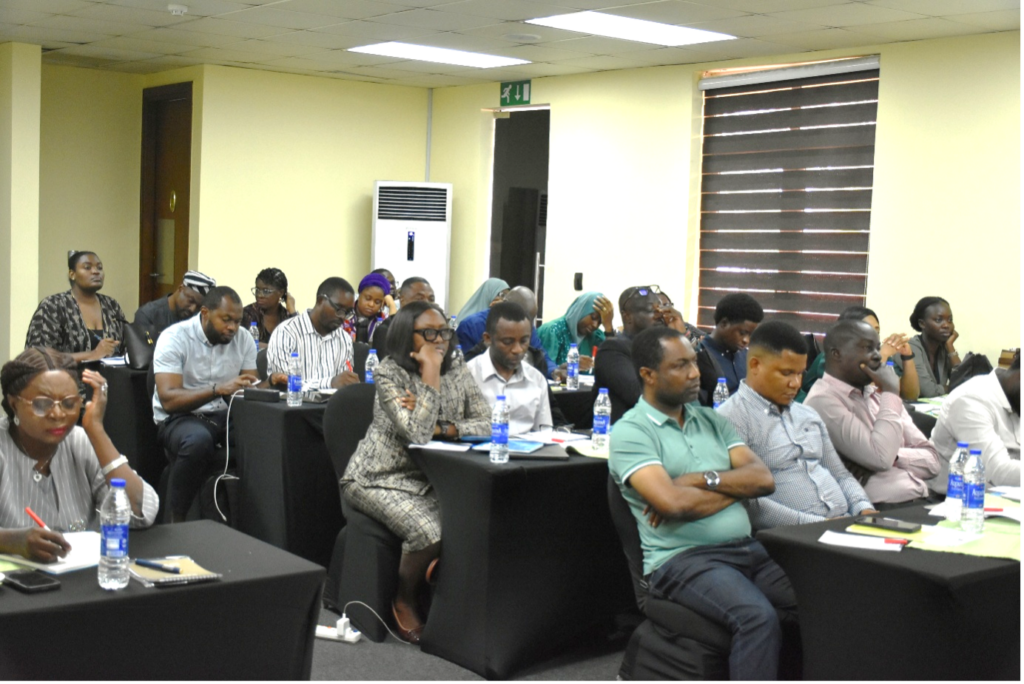
Participant listening keenly during the session. Image credit Isaiah Ude/FHI360

Additional technical discussions focused on the management of mpox and diphtheria cases, with facilitators emphasizing timely recognition of symptoms, appropriate patient isolation, specimen collection procedures, and adherence to standard treatment and IPC protocols. Participants also explored the epidemiology and management of viral hemorrhagic fevers, including Ebola Virus Disease and Lassa fever, with strong emphasis on biosafety, PPE use, environmental hygiene, and emergency response coordination.

The workshop further featured practical demonstrations on hand hygiene, point-of-care risk assessment, triage simulation, and proper donning and doffing of personal protective equipment (PPE). Facilitators reinforced the importance of standard precautions and highlighted the role of healthcare workers in protecting themselves, patients, and communities during outbreak situations.

Recognizing the need for sustainability and wider dissemination of knowledge, the workshop also included sessions on adult learning principles and Training of Trainers (ToT) methodology. Participants were guided on strategies for conducting effective cascade training within their institutions using participatory and competency-based approaches.

As part of the training cascade planning session, representatives from participating institutions committed to replicating the training across their facilities and professional networks. These commitments included step-down training for emergency departments, outpatient units, zonal networks, and private healthcare facilities across Lagos State.

The workshop recorded significant improvements in participants’ knowledge. Pre-test and post-test assessments demonstrated a marked increase in understanding of epidemic-prone disease management and infection prevention and control practices, reflecting the effectiveness of the training approach.

Participants described the training as highly impactful, particularly the practical demonstrations, interactive learning sessions, and discussions of real-life case scenarios. Nurse Emeh Amaka noted that the training helped dispel misconceptions and fear surrounding infectious disease management, stating,

 “The most important learning I got from this training is that fear and stereotypes as to the mode of transmission of various infectious agents were cleared, and it has given me more confidence in the care of patients with such presentations.”

Dr. Toluwanimi Amusa highlighted the practical relevance of the workshop, saying,

 “I gained knowledge on how to improve care delivery and protect myself and other healthcare workers from epidemic diseases.”


Another participant, Dr Temitope Ogunniyan described the workshop as essential for all healthcare workers, emphasizing the value of the learning experience by stating,

“This is not the type of training that anyone should be left out of. I paid full attention for the 3 days, and I am grateful to the organizers.”

The workshop concluded with closing remarks by Dr. Ismail Abdus-Salam, who appreciated participants’ active engagement and encouraged them to sustain the knowledge and practices gained during the training. He reiterated the importance of maintaining a high index of suspicion for epidemic-prone diseases and ensuring timely reporting, effective case management, and strict adherence to infection prevention and control measures across all levels of healthcare delivery.

Dr Ismail expressed commitment by the Lagos State Ministry of Health, healthcare institutions, and partners to strengthen health security through cascade of knowledge from the workshop across facilities, continuous learning, effective surveillance, and improved case management systems toward building a more resilient health system capable of preventing, detecting, and responding to public health threats.