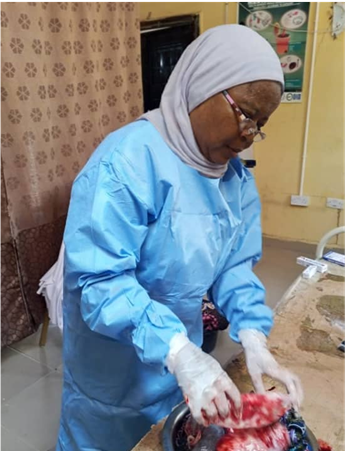
Facilitator-led Delivery in PHC
AN EPIC SUCCESS STORY
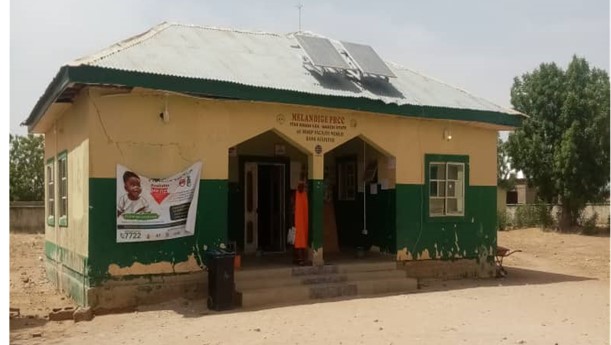
Safe Delivery in a Workforce Constrained PHC: a mentorship visit that turned into an emergency delivery and a safe outcome in Melandige PHC, Itas/Gadau LGA, Bauchi State
Executive Summary
The Meeting Targets and Maintaining Epidemic Control (EpiC) project is a global project funded by the United States Government to provide high-quality technical support at the community, health facility, state, and national levels to improve outcomes in HIV, Global Health Security, Malaria, Nutrition, and Maternal, Newborn, and Child Health (MNCH).
In Bauchi State, EpiC is supporting the government to prevent, detect, and respond effectively to health threats, and to improve access to medical oxygen systems through liquid medical oxygen infrastructure (LOX), while enhancing access to and the quality of essential health services, with a focus on Maternal, Newborn, and Child Health and Nutrition (MNCH+N) interventions in 16 priority LGAs.
The objectives of the MNCH+N interventions are to;
- Strengthen service availability for essential services (ANC, delivery, PNC, newborn and child health) in the supported facilities and align Nutrition 774 (N-774) implementation within PHC platforms.
- Support on-site mentorship and supportive supervision for providers.
- Strengthen community–facility linkages, referral, follow-up, and community-based delivery of Nutrition Services
- Strengthen the use of Health Information System (HIS) data and analysis for improved PHC oversight and performance management across priority LGAs.
In February 2026, EpiC conducted onboarding and site visits to assess MNCH+N readiness across supported PHC facilities in 16 high-burden maternal death LGAs in Bauchi State. Following critical gaps noted during the visits, EpiC engaged a team of trained mentors made up of retired midwives, quality improvement (QI) officers, health system strengthening (HSS) experts, as well as monitoring and evaluation officers from previous MNCH programs to address critical gaps through mentorship and supportive supervision in the facilities.
Despite significant progress achieved by the Bauchi State Primary Healthcare Development Board (BSPHCDB) in mitigating health workforce shortages, there are still some gaps regarding the round-the-clock availability of skilled birth attendants at healthcare facilities. On 13th March 2026, a pregnant woman in active labour arrived at Melandige Primary Healthcare Centre, a Primary healthcare facility facing critical workforce shortages. The skilled birth attendant employed in the health facility was away on a state assignment at the time. With only the officer-in-charge available at the facility, and referral not immediately feasible due to time constraints, an EpiC mentor (state-trained SBA) present in the facility stepped in to support the delivery. Drawing on recent training, the mentor guided the delivery process while ensuring infection prevention, monitoring for danger signs, and providing timely post-delivery care. The mother delivered safely, and both mother and newborn were stabilized and monitored. This experience demonstrates how targeted capacity strengthening can enable safe, lifesaving actions in low-resource and human-resource-constrained settings.
Background
Melandige PHC serves a largely rural community and surrounding villages within Itas/Gadau LGA of Bauchi State (one of the priority high maternal mortality LGAs) with a catchment population of approximately 229,000 people across a landmass of about 1,398km2. The facility routinely experiences staffing gaps, particularly during night shifts, weekends, and leave periods, as only one SBA currently works there. The SBA is usually supported by volunteers who come sporadically.
On the 13th of March 2026, the skilled birth attendant was engaged with other activities in the State when a 23-year-old woman at term (39 weeks gestation) presented in active labour with the baby’s head at the perineum. Immediate referral was challenging due to time constraints, increasing the risk of maternal and neonatal complications. The healthcare worker in charge of the facility, who was available at the time, was overwhelmed attending to several other patients but opted to attend to the emergency. However, the woman in active labour refused to be attended to by the busy male healthcare worker due to cultural reasons. Hence, the EpiC mentor stepped in to assist.
As part of the EpiC project MNCH+N lifesaving activities, selected mentors had previously received structured Basic Emergency Obstetric and Newborn Care training focused on:
- Basic intrapartum care and neonatal care, including recognition of danger signs
- Infection prevention and respectful maternity care
- Clear referral and escalation pathways
In the absence of an SBA, the on-duty mentor applied these competencies to support the delivery while adhering strictly to scope, safety, and referral guidance.
Implementation Highlights
Having established that the woman was in the active phase of labor and undergoing a spontaneous vaginal birth, the mentor noted that the baby’s head was already at the perineum. Faced with extreme time constraints because the baby had the cord around the neck and a face presentation, the mentor swung into action, drawing on capacity built through previous training. She delivered a live male baby weighing 3kg at birth, while ensuring infection prevention.
Other steps
- Active management of the third stage of labour (AMSTL) was conducted
- Injection Oxytocin 10IU was given
- The facilitator and the Officer in charge of the facility continuously monitored the mother and newborn for complications.
- Essential newborn care, including thermal care and early breastfeeding, were instituted. Chlorhexidine gel was applied to the cord
- APGAR score was 8/10 at 1 minute and 10/10 at 5 minutes
- The perineum was sutured under local anaesthesia
- The woman was counselled on maternal nutrition, family planning, exclusive breastfeeding, infection prevention, immunization, and care of the perineum.
- Prompt documentation and notification of the supervisory staff were done
- Post delivery observation and preparation for referral.
Results
A live birth was achieved with no immediate maternal or neonatal complications. The Mother and newborn were stabilized and observed appropriately. Documentation from the event informed subsequent mentoring discussions and SOP refinement.
“I was initially worried, but I was very relieved when she stepped in to help. I learnt a lot from how she handled everything. This experience showed us that mentorship and supportive supervision really matter, especially when staffing is limited.”
— Facility In Charge
Conclusion
This experience highlights how task sharing within clearly defined boundaries, supported by mentorship, can reduce avoidable risks in underserved settings. Lessons from this case informed facility discussions on duty rosters, emergency readiness, and strengthened advocacy for improved staffing.
NB: This story is anonymized. Consent was obtained for documentation. The facilitator acted within agreed protocols, prioritizing safety and referral readiness at all times.