

EpiC Launches Maternal, Newborn, Child Health, Nutrition (MNCH+N) and Global Health Security Projects in Bauchi State, Nigeria
AN EPIC SUCCESS STORY

The United States-funded Meeting Targets and Maintaining Epidemic Control Project (EpiC) held a two-day inception meeting on the 10th and 11th of February 2026 to launch its Maternal, Newborn, Child Health, Nutrition (MNCH+N) and Global Health Security (GHS) projects in Bauchi.
Bauchi faces a persistent burden of preventable maternal, newborn, and child deaths, alongside critical nutrition challenges that undermine child survival and human capital. Additionally, the State remains vulnerable to recurrent infectious disease outbreaks, antimicrobial resistance, and public health emergencies, exacerbated by population mobility, environmental risks, and health system constraints. The EpiC GHS and MNCH+N project, with funding from the United States Department of State (DOS), will partner with Bauchi State to translate commitments into measurable health improvements.
The inception meeting attracted key health sector stakeholders, including officials from the Bauchi State Ministry of Health and Social Welfare, Bauchi State Primary Health Care Development Board, program directors, implementing partners, including Gates Foundation, Jpeigo, SFH, and technical teams working at the State and LGA levels, to align strategies and develop a coordinated implementation plan.
The objectives of the inception meeting were to;
- Sensitize stakeholders on EpiC’s Support for Bauchi State
- Share EpiC MNCH/Nutrition + GHS Implementation strategy
- Validate State coverage and health facility list for MNCH/N support
- Develop LGA-Level Rollout Plan for MNCH/Nutrition Activities
- Review and validate evidence-based Public Health Messaging and Community Engagement strategies for MNCH+N and GHS.
The meeting commenced with a welcome address and opening remarks from the Executive Chairman of the Bauchi State Primary Health Care Development Board (EC BSPHCDB), Dr. Rilwanu Muhammad. Speaking on behalf of the Honourable Commissioner of Health, Dr. Sanni Mohammed Dambam, he described the project as a timely and much-needed intervention for the State.
The EpiC Project Director, Dr. Hadiza Khamofu, during her presentation on the EpiC project, expressed deep gratitude to the United States Department of State for funding the project.
The EpiC team presented proposed activities for the MNCH+N and GHS Scopes. Proposed activities included;
- Improving access to functional PHC Services in Priority LGAs
- Improving quality of MNCH+N service delivery at supported health facilities by strengthening the capacity of facility-based providers to deliver integrated MNCH+N service packages. Supporting on-site mentorship and supportive supervision for providers.
- Increasing demand for lifesaving MNCH/N Services through Community Engagement & Awareness Creation
- Improving Health Information, Monitoring, and Learning Systems at both LGA and facility levels and
- activities focused on prevention, detection, and rapid response to public health threats such as IHR coordination, strengthening the capacity of health workers on biosafety and biosecurity, strengthening laboratory systems, early warning surveillance systems, and AMR coordination, etc.
Following the presentations on the EpiC project, the GHS scope, and the MNCH+N scopes by EpiC team members, stakeholders were allowed to ask questions after each session.
The EpiC team utilized this session to prioritize stakeholder needs, identify enablers and success signals to guide project implementation.
Emerging priorities included;
- The need to expand beyond the 11 MAMII LGAs, noting that more maternal deaths are being reported from five non-MAMII LGAs (Toro, Alkaleri, Tafawa Balewa, Misau, and Ganjuwa)
- Request for more GHS support, especially around outbreak response activities, highlighting the current high Lassa Fever morbidity and mortality rates across the state.
- Capacity gaps around data collection and use in health facility and LGA levels.
- The need to support the distribution of commodities to the last mile, stating that they have MNCH and Nutrition commodities in the state warehouse, for which they require support to distribute.
- Capacity gaps in utilizing MNCH commodities already distributed to some facilities, noting that these are not being used because 114 health facilities require EMOTIV training, and only 52 have received training on the PPH bundle of care.
- The need for sustainable initiatives, including the preference for use of the more sustainable Mama to Mama initiative for community-based health activities rather than paid community-based health workers CBHWs.
- The need for interventions around blood transfusion services as some of their Comprehensive Emergency Obstetric and Newborn Care (CEmONC) facilities have blood transfusion capacity.
The EC SPHCDB emphasized the need for coordination among partners such that EpiC’s efforts complement and do not duplicate existing support from partners such as UNICEF and WHO.
Success signals included;
- Strong government commitment and ownership.
The State MNCH coordinator, Jummai Inuwa, in her speech, noted that stakeholders would develop an LGA-level rollout plan for MNCH and nutrition activities based on the provisions of the SWAp disbursement-linked indicator (DLI) operations in Bauchi State, which will guide the implementation process of the project.
The ALGON Director, Sulaiman Abdu Kirfi, reiterated that the LGA teams are ready to collaborate effectively to achieve success.
The Bauchi State SWAp coordinator applauded the project, stating that the project aligns with four SWAp DLI objectives under the HOPE project.
- Favourable environment for Adaptive management.
Participants openly acknowledged capacity gaps, particularly at LGA and facility levels, including the need for support with data collection and use, acknowledging the importance of data use and learning by doing. This indicates a favorable environment for adaptive management and continuous learning.
The second half of the meeting continued with breakout sessions for GHS and MNCH+N.
Participants were divided by LGA into twelve groups, comprising the 11 MAMII LGAs, and the 12th group was the high-burden LGA group (representing the 5 high-maternal mortality LGAs). The group work sessions were used for micro-planning. The groups validated state coverage and health facility lists for MNCH/N support and developed an LGA-Level rollout plan for MNCH/Nutrition Activities and GHS activities. The meeting concluded with plenary presentations from each team.

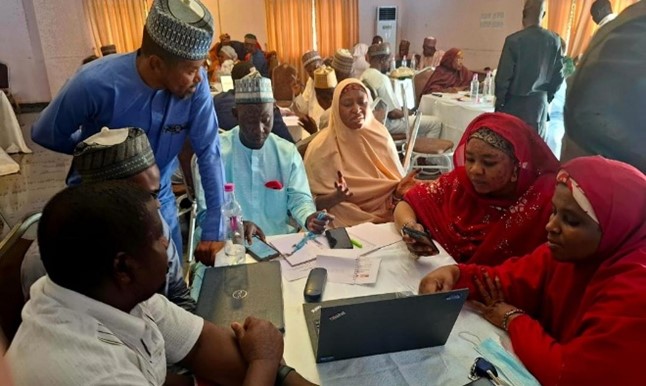
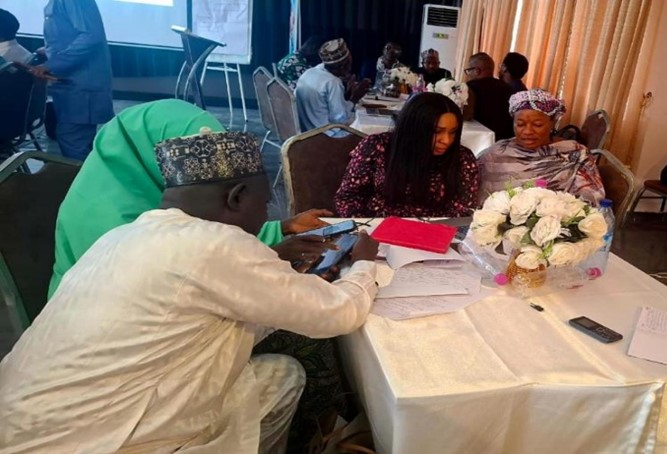
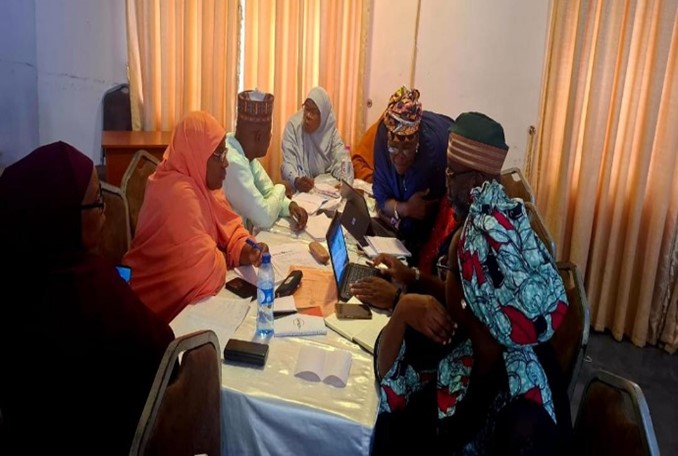
Some LGA Group work sessions