

EpiC Boosts Outbreak Response Capacity in Akwa-Ibom and Bauchi States through Community-based Surveillance Training.
EPIC SUCCESS STORY
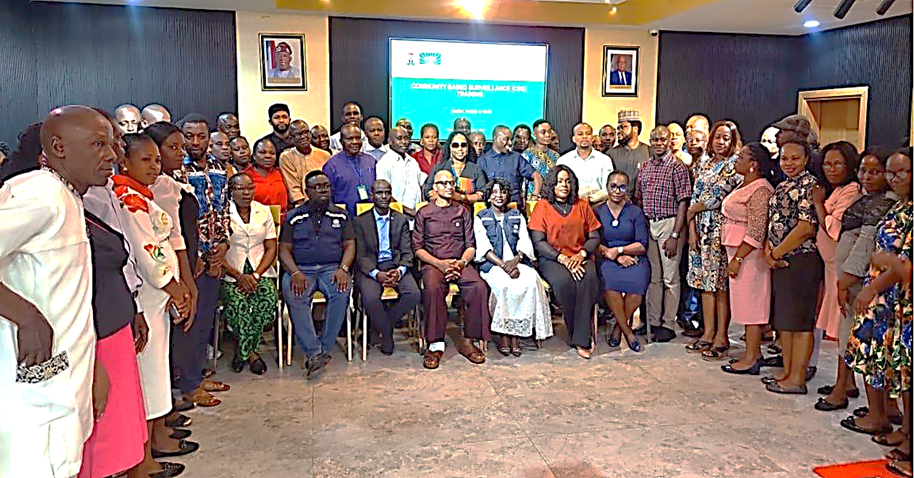
In the fight against infectious disease outbreaks, strong community surveillance is an essential line of defence. Recognizing this, the FHI 360 Meeting Targets and Maintaining Epidemic Control (EpiC) project recently rolled out comprehensive community-based surveillance (CBS) training in Akwa Ibom and Bauchi States in collaboration with the Nigeria Centre for Disease Control and Prevention (NCDC), the Akwa Ibom State Ministry of Health (SMOH), the Bauchi State Ministry of Health, the Bauchi State Primary Health Care Development Board (BSPHCB), and the World Health Organization (WHO).
The training was implemented between October 14-18, 2025, in Akwa-Ibom State and October 28 to November 1, 2025, in Bauchi State. It aimed to strengthen early disease detection, reporting, and response capacities across Akwa-Ibom and Bauchi States by building the competencies of surveillance officers and community informants in community-based surveillance, contact tracing, and referral of epidemic-prone diseases. This intervention supports Nigeria’s Integrated Disease Surveillance and Response (IDSR) strategy, which emphasizes community-level surveillance as the foundation of outbreak detection and response.
The objectives of the training were to;
- Build the capacity of Disease Surveillance and Notification Officers (DSNOs) to cascade CBS training to community informants.
- Standardize the use of national CBS tools and reporting flow across LGAs.
- Strengthen linkages between communities and the formal IDSR system.
- Foster early detection, verification, and reporting of epidemic-prone diseases.
The training was done in two phases, comprising a Training of Trainers and Step-down Trainings. The Training of Trainers (ToT) phase held in Uyo from October 14–15 in Akwa-Ibom State and from October 28-29, 2025 in Bauchi State. EpiC facilitated the training using the NCDC CBS module. Sixty-two ( 62) LGA DSNOs were trained in Akwa-Ibom State and 40 DSNOs and assistants were trained in Bauchi State.

The trained DSNOs conducted step-down trainings across 31 LGAs in Akwa-Ibom State, and 20 LGAs in Bauchi State, training a total of 656 community informants in Akwa-Ibom State and 646 Community Informants in Bauchi State between October 17th-18th and October 31–November 1, 2025, respectively.
The trainings incorporated practical and scenario-based learning, covering community-based surveillance (CBS) overview and structure, CBS workforce selection, communication, supportive supervision, IDSR-CBS linkages, and practical sessions on signal detection and reporting. Participants developed draft LGA community surveillance micro-plans and showed significant improvement in post-test scores after the training. These capacity-building efforts were supervised by multi-agency teams from EpiC, WHO, NCDC, and SMOH using a structured checklist.
Training Output
- A total of 102 surveillance officers (DSNOs and Assistant DSNOs) and I,302 community informants were trained across the 31 LGAs of Awka-Ibom State and 20 LGAs of Bauchi State.
- Participants demonstrated marked improvement between pre- and post-tests, indicating enhanced understanding of CBS principles and signal detection.
- Supervisory teams reported timely commencement and strong participation across LGAs.
- Practical exercises reinforced participants’ ability to detect, report, and respond to signals at the community level.
There was improved State ownership and collaboration among partners (EpiC, NCDC, WHO and SMoH) in both States.
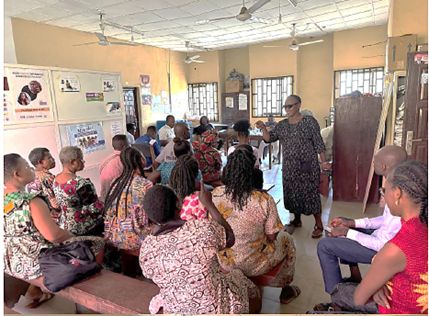
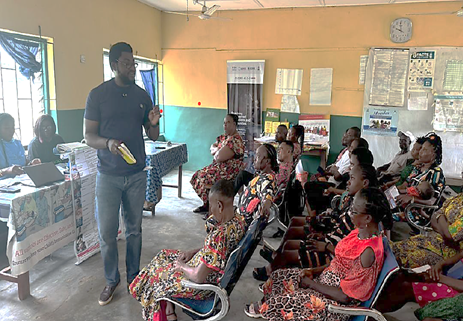
The EpiC-supported CBS training provided the needed platform to equip DSNOs with the skills to recognize and detect epidemic-prone diseases early, cascade CBS training, standardize national tools, and reinforce reporting flows. This initiative equipped DSNOs and community informants across all 31 LGAs of Akwa-Ibom and 20 LGAs of Bauchi State with the skills to detect, report, and respond to potential health threats quickly and effectively. It bridges the gap between communities and the formal Integrated Disease Surveillance and Response (IDSR) system. The stronger the linkages, the faster the disease verification, timely reporting, and ultimately, more resilient health systems capable of preventing outbreaks before they escalate.
With continued mentorship, these communities will become active partners in surveillance, and their CBS networks will become a cornerstone for early outbreak detection and community resilience. Hence, encouraging a proactive, responsive, and sustainable public health framework that safeguards the entire State. By strengthening grassroots capacity, EpiC is helping to build resilient systems that ensure quicker outbreak detection, stronger response coordination, and ultimately, safer communities