

FHI 360 EpiC Strengthens Biosafety and Biosecurity Capacities across the North-East and South-South zones of Nigeria
The training conducted in collaboration with the Nigerian Centre for Disease Control and Prevention (NCDC) was for public health laboratories involved in the surveillance of priority and emerging infectious diseases in the South-South and North-East regions.

This initiative aligns with the 2023 Joint External Evaluation (JEE) recommendations and supports Nigeria’s national commitment to health security, improved disease surveillance, and multi-disease testing.
Public Health Laboratories are responsible for detecting, containing, and reporting high-risk pathogens such as Lassa fever, yellow fever, cholera, Mpox, tuberculosis, and emerging viral threats like SARS-CoV-2 variants, etc. Despite this critical role, gaps have persisted in biosafety and biosecurity practices, particularly in settings affected by insecurity and limited infrastructure.
The goal of the training was to
- Build the capacity of laboratory personnel to reduce the risk of laboratory-acquired infections (LAIs) during multi-pathogen diagnostics.
- Ensure sample integrity and maintain safe diagnostic workflows in multi-disease testing environments.
- Strengthen biosecurity measures, particularly in fragile settings such as the North-East.
- Ensure compliance with national and international standards, including the IHR (2005), GHSA, and NAPHS.
- Enhance regional preparedness against zoonotic spillovers, antimicrobial resistance, and future pandemics.
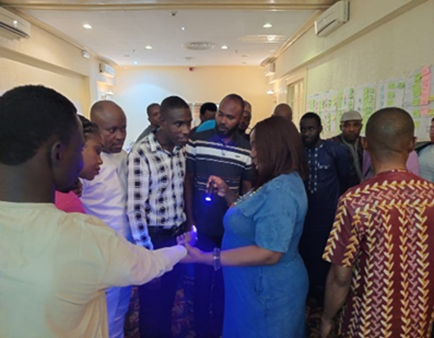

The 5-day workshop implemented through peer-led learning targeted laboratory staff (Biosafety Officers & Deputies) from selected facilities across the 12 States in the South-South and North-East geopolitical zones.
The workshop participants (25 (M-16, F-9) included representatives from NCDC, FHI 360, FMC Asaba, Gombe State Specialist Hospital, IDH Calabar, UMTH, ATBUTH Bauchi, Akwa Ibom State Public Health Lab, Akwa Ibom State Molecular Lab, FMC Jalingo, University of Benin Teaching Hospital Edo, University of Port-Harcourt Teaching Hospital Rivers, and State Specialist Hospital (SSH) Damaturu, SSH Yola, and Molecular Lab Bayelsa.
The training objective was to equip participants with essential knowledge and practical skills in the following areas:
- Foundational concepts of Biorisk Management
- Principles and practices of Decontamination
- Importance and methods of Biological Waste Management
- Conducting Biosafety Risk Assessments and Laboratory Safety Inspections
- Spill Management procedures
- Proper Hand Hygiene and Handwashing Techniques
- Selection, Donning, and Doffing of Personal Protective Equipment (PPE)
The workshop served as a valuable networking platform, strengthening collaboration between the national and state laboratory stakeholders and facilitating shared ownership.
This initiative represents a strategic investment in public health infrastructure. It is expected to enhance the effectiveness of laboratory systems and strengthen resilience against biological threats by applying the three pillars of the Biosecurity AMP model (Assessment, Mitigation, and Performance).